
A new report by Spanish public broadcaster verification service VerificaRTVE has added a crucial piece to the growing international debate surrounding the treatment of stray dogs in Morocco. While the article attempts to fact-check claims circulating on social media, the conclusions reveal more significant detail for the global campaign to end the mass killing of dogs ahead of the 2030 FIFA World Cup.
Significantly, VerificaRTVE approached the International Animal Welfare Protection Coalition (IAWPC) directly while preparing the report to verify whether dogs were indeed being slaughtered in Morocco and to examine the alleged connection with the country’s preparations to co-host the 2030 FIFA World Cup.
Far from dismissing concerns, the report confirms that the issue is real, widely reported and under international scrutiny.
For the International Animal Welfare Protection Coalition (IAWPC), the findings underline exactly why the campaign must continue.
The VerificaRTVE investigation acknowledges that multiple respected international media outlets, including CNN, Euronews and The Athletic, the sports arm of The New York Times, have documented incidents involving the killing of stray dogs in Moroccan cities.
These reports include eyewitness testimony and on-the-ground investigations in locations such as Marrakech, one of the host cities for the upcoming tournament and a popular holiday destination for foreign tourists.
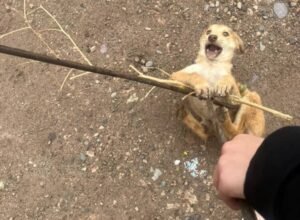
The article also highlights that footage submitted by the IAWPC appears to show abuse and executions of dogs in areas surrounding stadiums used during the Africa Cup of Nations, which Morocco hosted between December 2025 and January 2026.
Although the broadcaster states it could not independently verify every piece of footage, the existence of the evidence itself, along with consistent reporting from multiple sources, reinforces the urgency of the issue.
Moroccan authorities continue to strongly deny authorising any abuse of stray animals, despite what campaigners say is mounting evidence attracting both national and international attention.
Officials told VerificaRTVE that the government “rejects all accusations” suggesting policies that permit cruelty toward dogs. They say Morocco recognises the complexity of managing stray populations and insist that the country is moving toward more humane solutions.
Central to this claim is the CNVR approach, Catch, Neuter, Vaccinate and Return, which the government says it began implementing in 2019 and accelerated after 2023.
However, campaigners point out that there is currently no known evidence of authority-tagged dogs that would typically indicate a functioning CNVR programme, raising questions about the claims made to the Spanish broadcaster by Moroccan officials.
The IAWPC has repeatedly stated that it has seen no transparent evidence that a nationwide CNVR programme is being properly implemented, or even underway.
Coalition members say there is also no publicly available data detailing funding levels, operational scale or outcomes of the alleged programme.
The Moroccan parliament is currently processing a new Government animal protection Draft Law 19.25, which critics say is regressive and deeply flawed. Campaigners argue that the legislation could institutionalise punitive measures that criminalise compassionate community engagement, enable unchecked mass killing of stray dogs to continue, and disregard the best available scientific evidence on population and disease control.
As a result, it has faced widespread criticism and condemnation both within Morocco and internationally.
Animal welfare groups warn that such provisions could easily be used to legitimise large-scale killing.
Morocco’s government points to public health concerns as justification for intervention, noting that more than three million dogs are estimated to live in the country.
In 2025, the World Health Organization advised Morocco to prioritise vaccination and sterilisation programmes, warning that mass killing of dogs is both costly and ineffective.
Scientific evidence shows that culling does not reduce rabies transmission. Instead, it destabilises dog populations and can make the problem worse.
The VerificaRTVE report also highlights how misinformation can spread online.
One widely shared photograph claiming to show a dog being shot in Morocco actually dates back to Iraq in 2008. The IAWPC has repeatedly flagged this image as not originating from Morocco. However, the coalition says it does possess verified photographs and video evidence showing dogs being shot in Morocco.
The IAWPC strongly condemns the circulation of inaccurate material, which risks distracting from genuine evidence and undermining legitimate concerns.
However, what is equally important to recognise, and what the verification report confirms, is that real incidents have been documented and the international community is paying attention.
The upcoming 2030 World Cup, which Morocco will co-host with Spain and Portugal, has placed the country under unprecedented global scrutiny.
Major sporting events have historically triggered efforts by Moroccan host cities to remove stray animals from public view. That is precisely why campaigners fear the situation could worsen as the tournament approaches.
FIFA and the IAWPC confirm that a review by an international panel of experts has taken place and, as a result, comments as well as suggested amendments to Draft Law 19.25 have been sent to the Moroccan Government for consideration.
The VerificaRTVE investigation shows that the issue has moved far beyond social media.
It is now being debated by governments, international organisations, journalists and football authorities.
The IAWPC is also calling on Spain, as a co-host of the 2030 World Cup, to publicly denounce the mass killing of dogs and press Morocco to implement a genuine, transparent CNVR programme.