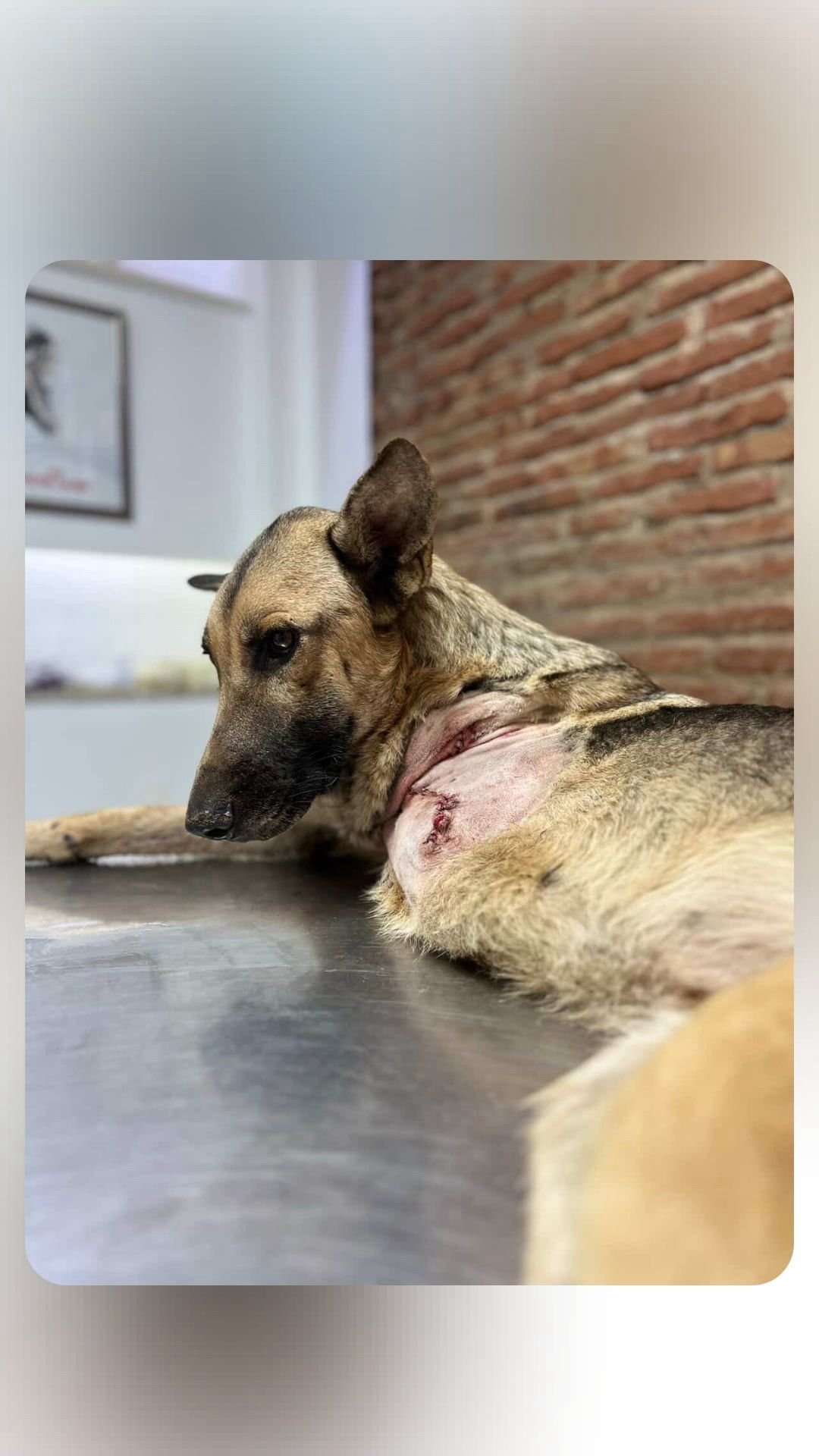
A Moroccan community has rallied together to save the life of a street dog who was brutally shot and left for dead by government dog catchers operating in the border city of Nador, after a harrowing post by the International Animal Welfare Protection Coalition sparked urgent local action.
The dog, now affectionately nicknamed Jonny by campaigners, was discovered with catastrophic injuries after being targeted during a violent sweep of free-roaming dogs in the area. His survival is being credited directly to images shared by the International Animal Welfare Protection Coalition (IAWPC), which prompted local residents to step in and intervene.
After seeing the distressing photographs on the IAWPC’s Instagram page, members of the public mobilised quickly, transporting the gravely injured dog to a veterinary clinic. Vets were able to save his life, although the extent of his injuries meant one of his legs had to be amputated. Jonny is still alive, and set to make a full recovery thanks to their fast action.

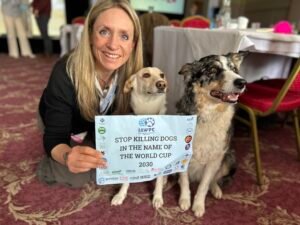
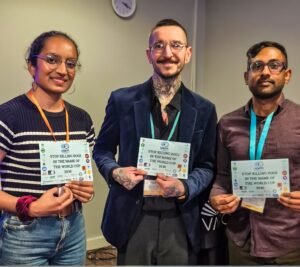
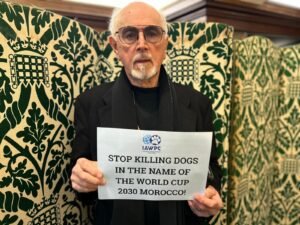
The IAWPC was founded by Edinburgh-based animal welfare campaigner Les Ward, who established the coalition to unite charities and campaigners worldwide against the systematic killing of free-roaming dogs. Today, the coalition represents 80 high profile organisations and has become a leading international voice on the issue.
Nador’s location makes it particularly vulnerable to such killing operations. The city sits close to the Algerian border and serves as a major entry and exit point into Morocco, often acting as a first stopping point for tourists. Campaigners say this strategic visibility has made it a frequent target for dog culls aimed at presenting a sanitised image of the streets.
Animal welfare groups warn that killings intensify ahead of major international events. While much attention has focused on Morocco’s preparations for the 2030 FIFA World Cup, campaigners stress that brutality escalates around all large-scale tournaments.
Morocco is currently preparing to host the Africa Cup of Nations, which kicks off on December 21, with reports of increased violence against dogs already emerging around stadium sites and redevelopment zones.
Les Ward MBE, chairman of the IAWPC, said Jonny’s case is deeply distressing, but far from isolated. “What has happened to Jonny is absolutely horrendous, but for the authorities he is just a statistic, one of many dogs facing this fate every single day at the hands of their killers. It is estimated that around 10,000 dogs a week are killed across Morocco using barbaric methods.”
Ward stressed that in most countries of the world, shooting, poisoning and the inhumane catching and killing of dogs are banned. He continued, “As methods of dog management they achieve nothing. They are ineffective in reducing numbers and also in the control of the spread of rabies, through creating a vacuum effect where new dogs move in, undo vaccination efforts and increase public health risks. Humane Catch, Neuter, Vaccinate and Return programmes are the only proven and sustainable way to manage dog populations and control rabies.”
Additional footage from Nador shared and verified by campaigners shows dogs beaten and bloodied on the back of trucks, with the men involved in these shameful practices, covering their faces as animals are loaded, apparently attempting to avoid being identified.
The IAWPC has in its possession, a ‘Purchase Order’ dated the 22nd September 2025, signed and officially stamped by the Mayor of a commune near to Nador. It is addressed to the Ministry of the Interior in Nador Province. In it, the Mayor confirms he is proceeding with the purchase of “ammunition”, specifically “1,000 Hunting cartridges for shooting stray dogs”. It is possible, that one of those ‘cartridges’ was used to shoot Jonny.
The authorities in the Nador area of Morocco have a tainted history. In November 2022, a Moroccan Judge, convicted and fined the Governor of the Nador Province, of killing stray dogs as part of a campaign the municipality carried out. The Judge described the killings as “uncivilized”. That the practices, “which date back to ancient times, are no longer acceptable. Developed societies are not measured by how they treat humans only, but also by how they treat animals”.
While Jonny faces a long recovery, campaigners say his rescue highlights once again the senseless brutality of the authorities, as well as the power of public awareness and community compassion. It also demonstrates the role that international scrutiny and social media can play in saving lives.
As Morocco prepares to welcome the world for major sporting events, the IAWPC, which includes charities including the RSPCA, Dogs Trust and PETA in its number, once again calls on the authorities to end their campaign of suffering and death – and that Jonny’s story becomes a turning point rather than just another one of their senseless and mindless statistics.