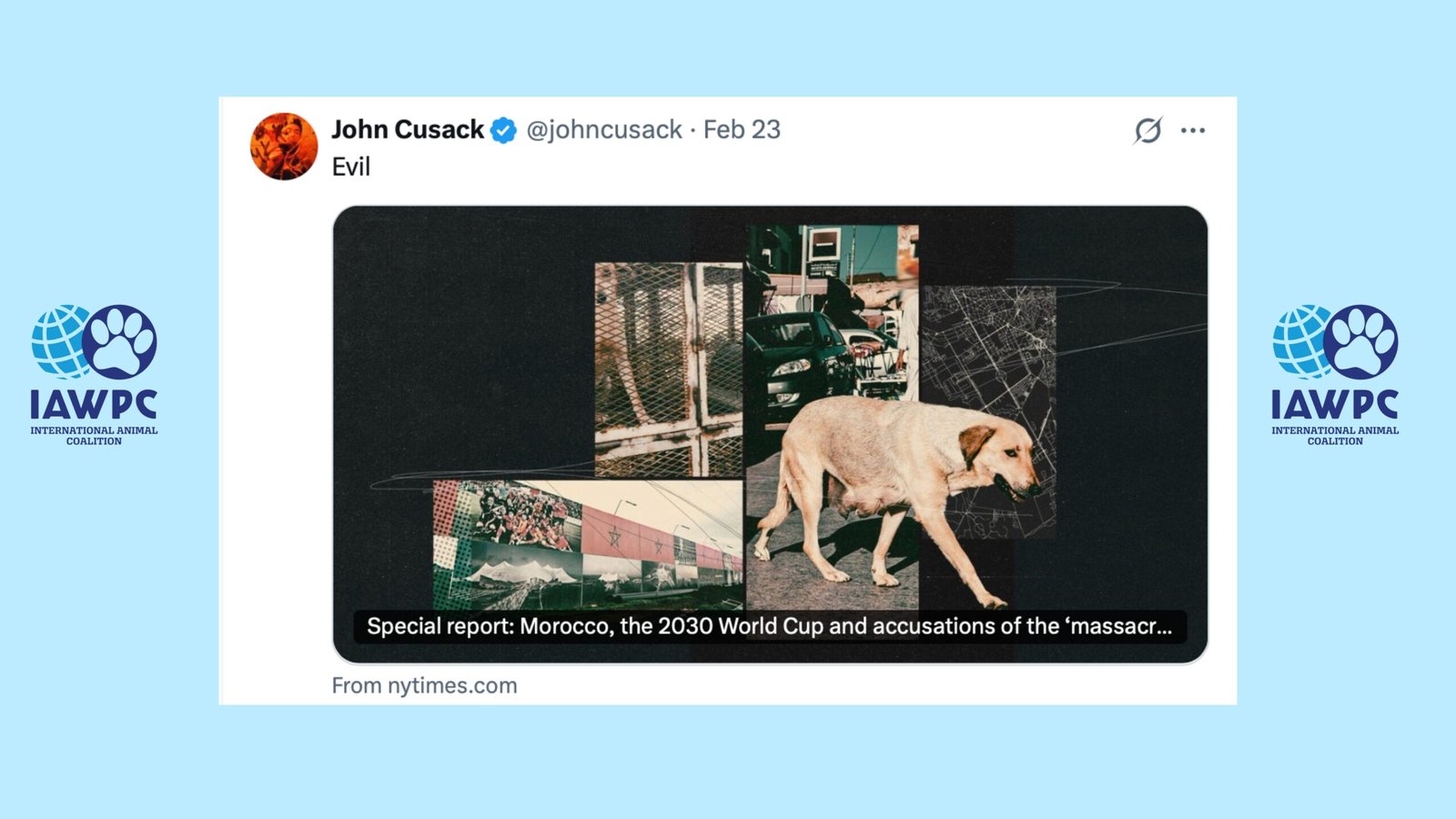
Hollywood actor John Cusack has become the latest international star to condemn Morocco’s treatment of street dogs, sharing a hard-hitting report by The New York Times with his millions of followers and describing the revelations as “evil”.
The High Fidelity star reposted The New York Times investigation into the mass killing of free-roaming dogs in Moroccan cities preparing to host major international sporting events, including the 2030 FIFA World Cup. His intervention has sent fresh shockwaves through the global football community and reignited calls for urgent reform.
Cusack’s comments come amid mounting pressure on the Moroccan authorities over allegations that dogs are being shot, poisoned and violently removed from the streets in a bid to “clean up” host cities ahead of tournaments.
At the centre of the international outcry is the International Animal Welfare Protection Coalition, known as IAWPC, a global alliance of more than 80 animal protection organisations campaigning for an end to the killing and for the immediate introduction of humane dog population management in Morocco.
The Coalition is urging the government to fully implement a nationwide, internationally respected Catch, Neuter, Vaccinate, Return programme, known as CNVR, which it says is the only scientifically proven and ethically acceptable way to control street dog populations and reduce rabies risk.
Instead, campaigners argue that mass culling is inhumane, ineffective, counterproductive and in breach of Morocco’s own animal welfare commitments.
Les Ward MBE, Chairman of the IAWPC, said celebrity backing can be transformative for campaigners working on the ground.
“When someone of John Cusack’s stature speaks out, people listen and it tells the world that what is happening to these dog’s matters. For the people of Morocco it means everything to know that their struggle is seen beyond their borders.”
He added that global attention offers both protection and hope. “Those on the ground often feel isolated and overwhelmed. When high-profile voices shine a light on the situation, it gives them strength and reassures them that they are not alone. It also sends a clear message to decision-makers that the world is watching. No longer is every animal life needlessly taken by the authorities in Morocco, a forgotten statistic. Instead, their deaths have become a rallying cry for more worldwide condemnation and opposition.”
The IAWPC campaign has already drawn support from a growing list of public figures, politicians and animal welfare experts, who argue that hosting prestigious sporting events should not come at the expense of animal welfare.
Campaigners insist they are not calling for boycotts but for reform, urging Moroccan authorities to work with international experts to scale up humane solutions that protect both public health and animal welfare.
Find out more at www.iawpc.org