
Campaigners are calling for evidence of how Morocco’s newly adopted animal welfare law is being applied amid concerns that unclear rules could leave people vulnerable to fines, intimidation and potential corruption.
Animal welfare groups have warned that confusion surrounding Morocco’s controversial Law 19.25 could out of fear of punishment, discourage members of the public from feeding or caring for free-roaming dogs. At the moment, as social media reports show, the opposite is currently happening. Moroccan people are already making it publicly clear, that the compassionate care of animals will continue, in spite of what the people see and fear as Government attempts to intimidate and criminalise all acts of kindness and humane care by individuals.
The International Animal Welfare Protection Coalition (IAWPC) is asking people across Morocco to submit evidence of the law being cited or enforced by officials, including details of any warnings, threats, fines or demands they have received.
Law 19.25 is officially intended to protect and care for stray animals while preventing the risks associated with them.
It covers areas including the collection and management of free-roaming animals, the creation of animal care centres, the registration of owned animals and penalties for killing, harming or abandoning them.
However, campaigners say its implementation remains clouded by uncertainty because a number of its provisions depend upon regulatory texts that have not yet been published.
Article 55 states that provisions requiring “implementing regulations” will only come into force once those texts have been published in Morocco’s Official Gazette. The Government has up to two years from the law’s publication in August 2026, to issue them.
The IAWPC says this means important details about how parts of the law will operate in practice have still not been decided or made clear to the public.
One of a number of grave concerns surrounds the everyday care of free-roaming animals.
Article 5 says that no person may shelter, feed or treat a stray animal except in accordance with the law and its implementing regulations. Article 44 provides for fines of between 500 and 2,000 Moroccan dirhams for people who breach those rules by sheltering, feeding or treating a stray animal in a public place.
But with the relevant regulations yet to spell out exactly what people may and may not do, campaigners fear compassionate residents could inadvertently fall foul of the legislation.
They are also concerned that uncertainty could have a chilling effect, causing people to stop feeding dogs and cats because they fear being fined or challenged by officials.
Les Ward MBE, chairman of the IAWPC, said: “People in communities across Morocco have cared for free-roaming dogs for years, often using their own limited resources to provide food, water and veterinary treatment. They are recognised, not just in Morocco but globally, as critical pillars in humane population management and welfare improvement.
“When people do not understand their rights, vague legislation can create opportunities for inconsistent enforcement, intimidation and potentially corruption. Someone feeding a hungry dog should not be left wondering whether they are committing an offence, nor should they be vulnerable to threats or demands because the law has not been properly explained.
Mr Ward continued: “Article 5 on private care is not alone in being seen as a priority ‘implementing regulation’. There are a number of other substantive protections and procedural safeguards under this law that depend on regulations rather than the text itself, where the two-year window creates a materially extended period during which many of the law’s provisions will not enter into force and the law’s practical effect on the ground may not match its stated purpose. These include Article 13(8) – ‘euthanasia criteria, safeguards and monitoring’; and the least constrained provision, Article 51 – ‘exceptional intervention’, which undermines Draft Law 19.25’s core obligation of protecting stray animals, but instead, as it stands, could be read as an open-ended exception. We are calling for specific guidance on all these ‘priority ‘implementing regulations’, must be expedited ahead of the general two-year deadline, given the direct bearing of these articles on animal life and welfare outcomes.
“We are asking people to send us accounts of any occasion on which Law 19.25 has been cited or used against them. This evidence will help us establish how the legislation is being interpreted on the ground and whether people or animals are already being harmed by the confusion.”
The Coalition represents 83 animal welfare organisations from around the world, including the RSPCA, Dogs Trust and PETA, and has been campaigning against Morocco’s treatment of free-roaming dogs ahead of the 2030 FIFA World Cup, which the country will co-host with Spain and Portugal.
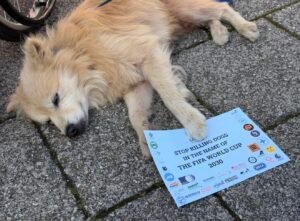
The IAWPC has hours of film footage showing dogs continuing to be shot, poisoned, beaten, rounded up and taken to overcrowded facilities, despite Morocco having previously committed to humane population management through vaccination, sterilisation and return programmes.
The Coalition has repeatedly submitted evidence to FIFA and the Moroccan authorities and is calling for an immediate end to the killing, alongside the introduction of a national comprehensive humane dog management programme, that includes a transparent Catch, Neuter, Vaccinate and Return programme.
Campaigners say Law 19.25 must be supported by clear, humane and publicly accessible regulations so that people understand both their responsibilities and their rights.
The IAWPC is now urging residents, animal carers and welfare organisations to document incidents carefully, including where and when they occurred, which authority or official was involved and what was said or demanded.
Get in touch by emailing outreach@iawpc.org