
The International Animal Coalition (IAWPC), representing 83 global animal welfare organisations, expresses its continuing serious concerns following the adoption of amended Draft Law 19.25, entitled “Relating to the Protection of Stray Animals, their Care and the Prevention of their Dangers”.
A substantial portion of the Amended Draft Law’s content is deferred to implementing regulations not yet drafted. Under Article 55, these texts may be published up to two years after the law itself enters into force. Until then, provisions requiring implementing regulations will not enter into force and the practical scope of such provisions cannot be assessed with certainty.
There are important ‘definitional’ gaps: Key terms used to trigger both obligations and defences including “unjustified” killing (Article 3); “appropriate” or “suitable” environment (Article 13(9)); “exceptional cases” (Article 51); and the scope of species covered by “stray animal” (Article 2) are undefined. This creates a foreseeable risk of inconsistent application by communal agents, oversight committees and courts.
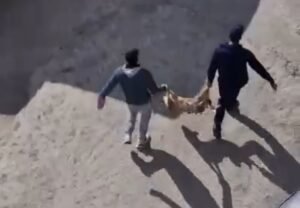
Protection from harm; “unjustified killing” (Article 3): This provision requires protection of stray animals from disease and from “unjustified killing, torture, violence or ill-treatment”, the qualifier “unjustified” having been added by amendment. The insertion of “unjustified” as well as the power to “intervene” in “exceptional cases” in Article 51, narrows the scope of protection relative to an unqualified prohibition, without the text specifying what circumstances render a killing justified. Absent objective criteria, this qualifier risks being read as a broad, uncontrolled exception rather than a narrow one., allowing dogs to continue being shot, poisoned or caught and killed.
Les Ward MBE, president of the IAWPC, said: “A law claiming to protect stray animals cannot leave the killing of healthy dogs hidden behind vague phrases, undefined exceptions and regulations that may not appear for another two years. It demands an unequivocal declaration that the culling/killing of healthy stray animals as a means of population control is prohibited”.
Criminalisation of Compassionate Care (Article 5): In the absence of the implementing texts, this provision is capable of being applied to informal and community-based feeding, sheltering or treatment carried out by individuals or civil society organisations, which are recognised in comparable regulatory frameworks as contributing to population and disease management rather than undermining it.
Denying basic care to strays violates fundamental principles of animal welfare and compassion. It also undermines efforts by local communities, volunteers and NGOs, that provide shelter, food, and veterinary care, often filling gaps where government resources are insufficient.
The criminalisation of care directly conflicts with the recommendations of the World Organisation for Animal Health (WOAH), WHO, and numerous international animal welfare declarations which endorse community engagement as essential to humane animal management.
Euthanasia at care centre (Article 13(8)): This permits the euthanasia of animals “under the supervision of a veterinarian”. This is the only stated safeguard. The text does not require documented clinical criteria, mandatory safeguards, independent monitoring, second opinion and review, a written record of the determination, or any reporting to the oversight committee established under Article 24. This is a materially lower level of procedural protection than is typical for euthanasia provisions in comparable animal-welfare frameworks.
Such a measure opens the door to the possibility or suspicion of secretive killings behind closed doors.
Exceptional administrative intervention (Article 51): This is the least constrained provision in the Amended Draft Law. It specifies no method of intervention (lethal or non-lethal), no veterinary or other professional involvement, no prior authorisation and no criteria defining what constitutes an “intervention”, an “exceptional case”, or a threat to “public order and security”. As drafted, it is capable of being read as an open-ended exception, undermining the law’s core obligation and purpose – to protect stray animals from “every threat to their safety”, rather than a narrowly bounded emergency power.
Other measures of concern include:
Powers to enter private residences and seize dogs (Articles 32 and 33): These empower administrative agents or representatives of communes, not judicial police officers alone, to enter “all public and private places,” without prior judicial warrant and permits the seizure of animals based on allegations, to be held at the alleged offender’s expense, Both Articles invert the presumption of innocence.
The IAWPC has sent its comments and recommendations to the Moroccan Government, the Houses of Representatives and Councillors.
In doing so, the IAWPC has called again for the killing of dogs to end and be immediately replaced, with humane Catch-Neuter-Vaccinate – Return (CNVR) or equivalent sterilisation programmes, as part of a wider national programme of comprehensive humane dog management that includes community engagement and education; law enforcement; and all animals leaving care centre’s or similar establishments, must be sterilised.
In addition, Morocco, as a country with endemic rabies and on a ‘national scale’, should also adopt ‘mass vaccination and sterilisation strategies’ aligned with international standards to safeguard both human and animal health. This was expressly recognised in the King of Morocco’s Partnership & Cooperation Agreement of 2019. Killing causes a “vacuum effect” whereby removed animals are rapidly replaced by unsterilised dogs, sometimes increasing the number of susceptible animals and prolonging disease transmission cycles.
Regrettably, through this law, Morocco remains an outlier in terms of the way it treats its dogs.
Les Ward commented: “Most countries recognise the sentience of animals and the strength of public opinion against cruelty and killing.
“Across North Africa and Middle East regions, there has been a consistent move towards humane and effective methods of rabies control and dog population management using vaccination and sterilisation and not killing, this is a move that Morocco has disappointingly failed to adopt”.