
A stark warning about the “normalisation of violence” and its impact on society will be delivered at a major press conference in Morocco this week, as campaigners, academics and legal experts unite to demand an end to mass animal culling and a shift to humane, science-based alternatives.
The conference, titled “Animal Protection in Morocco: Between Legal Texts, Their Implementation… and Silent Violence”, is being organised by the Social Organization for the Protection of Animals in partnership with the International Animal Welfare and Protection Coalition (IAWPC), an international alliance of 81 animal welfare groups working across public health, science and policy.
Speakers say violence against animals, particularly free-roaming dogs, continues relentlessly and mercilessly. The event will confront what organisers describe as a deep and dangerous gap between what the government says and realities on the ground.
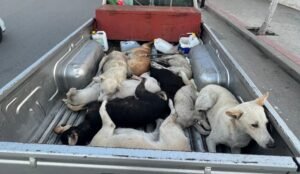
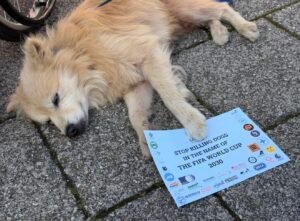
Campaigners say local authorities continue to rely on outdated, elimination-based approaches, including large-scale dog culling. These practices persist even as international bodies increasingly recognise humane population management as the only sustainable option.
The conference will bring together representatives from the Ministry of Interior, Ministry of Health, the National Office for Food Safety (ONSSA), the National Order of Veterinarians, alongside professors of ecology, environmental experts, lawyers and jurists specialising in animal protection and public law.
Organisers say the aim is not only to expose failures, but to force a national reckoning.
A key focus of the conference is what experts describe as “silent violence”, cruelty towards animals that becomes normalised in daily life and spills over into wider society.
Presentations will explore international research linking animal abuse to increased aggression and criminal behaviour in minors, warning that children who grow up witnessing violence against animals are more likely to become desensitised to suffering.
“Violence against animals is never isolated,” the conference briefing notes. “It is a red flag for deeper social harm.”
Central to the event is a call for Morocco to adopt the CNVR model, Catch, Neuter, Vaccinate, Return, a globally recognised approach shown to stabilise dog populations humanely while protecting public health and ecological balance.
Campaigners argue that CNVR is not only more ethical than culling, but more effective and cost-efficient in the long term.
Les Ward MBE, chairman of the IAWPC, said the conference comes at a critical moment.
“What we are seeing in Morocco is not a failure of knowledge, it is a failure of humanity and political will,” said Ward. “There is overwhelming scientific evidence that mass killing does not work. Humane CNVR programmes do. Continuing to ignore this evidence perpetuates suffering, damages public health and sends a deeply troubling message about how violence is tolerated in society.
He added that while the IAWPC will not be speaking at the event, the coalition has provided detailed reference material to inform discussions and recommendations.
“This conference is about accountability,” Ward said. “The Moroccan Government has had handed to them by FIFA, an ‘amended draft law 19.25’ produced by an IAWPC panel of experts, to replace one previously put forward by the Government, but which was regressive and deeply flawed, since it enabled unchecked mass killing of stray dogs to continue and disregarded the best available scientific evidence on population and disease control.
“The question now for Morocco, is whether it will be implemented to reflect ethical responsibility and respect for life, rather than continuing the mass slaughter of dogs.”
The press conference is expected to result in a joint statement, formal recommendations to government and parliament, and renewed calls for an immediate end to culling policies in favour of a nationwide CNVR strategy.